
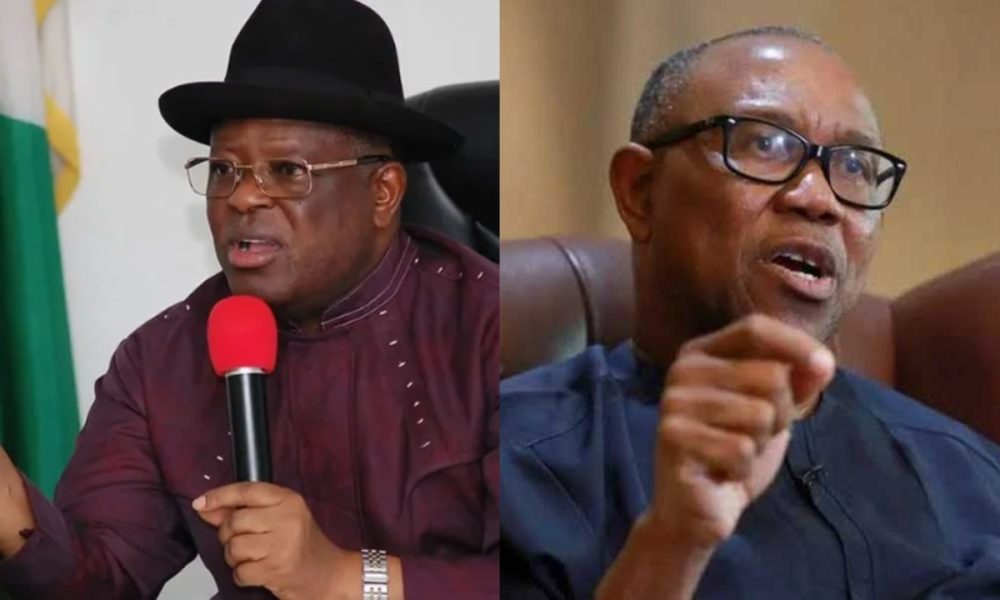
Minister of Works, David Umahi, has criticised former Anambra State Governor Peter Obi over his pledge to serve only one term of four years if elected president in 2027, insisting that the decision should not have been made without consulting political leaders in the South-East.
Umahi made the remarks during an interview with ARISE News anchor, Ojy Okpe, on Friday, arguing that Obi’s decision to limit his proposed presidency to four years raised questions about the region’s long-term political interests.
The former Ebonyi State governor questioned who had authorised Obi to make such a commitment on behalf of the Igbo people, noting that other regions and political leaders were pursuing the opportunity to serve two four-year terms.
“Igbos should be president and it’s four years, while others are doing eight years. Who in the South-East reached that agreement with our brother, Peter Obi, to say that you will go for us?” Umahi asked.
He argued that Obi should have consulted governors and other influential political stakeholders in the region before making a commitment he believes could affect their collective political aspirations.
“There are three presidential candidates from the Igbo extraction. You can’t play politics in the South-East without consulting people like us,” he said.
Umahi added that the issue had implications for his political future, the future of Ebonyi State and the interests of other states in the region.
According to him, South-East leaders should have held discussions to determine whether supporting a candidate from another region would improve their chances of securing the presidency in the future.
He maintained that broader consultations could have helped the region agree on a common political strategy ahead of the 2027 general election.
The minister also argued that if the presidency were to be zoned to the SouthEast, the region should consider candidates from states other than Anambra, which produced Nigeria’s first president, Nnamdi Azikiwe.
Umahi specifically mentioned Ebonyi, Enugu, Abia and Imo as states that should be considered in discussions about the region’s presidential ambition.
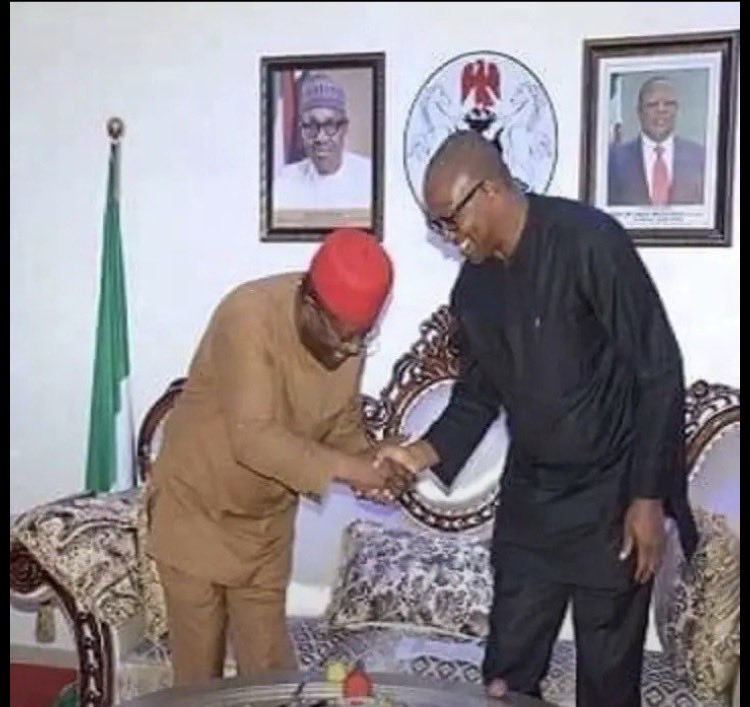
He further suggested that SouthEast political leaders could have agreed to support President Bola Tinubu for another term, with the expectation of building alliances and securing support from other regions when the presidency eventually became the SouthEast’s turn.
The minister’s comments come amid growing political discussions ahead of the 2027 presidential election, following Obi’s declaration that he would serve only one four-year term if elected.
Obi has maintained that four years would be sufficient to begin addressing Nigeria’s major challenges and has insisted that he would not seek a second term.
However, Umahi’s position reflects a different political calculation, centred on regional consultations, negotiations and the need to build alliances with other parts of the country.
The debate highlights differing views among South-East political leaders over whether Obi’s single-term pledge strengthens the region’s presidential prospects or whether a broader consensus should have been reached before such a commitment was made.
