
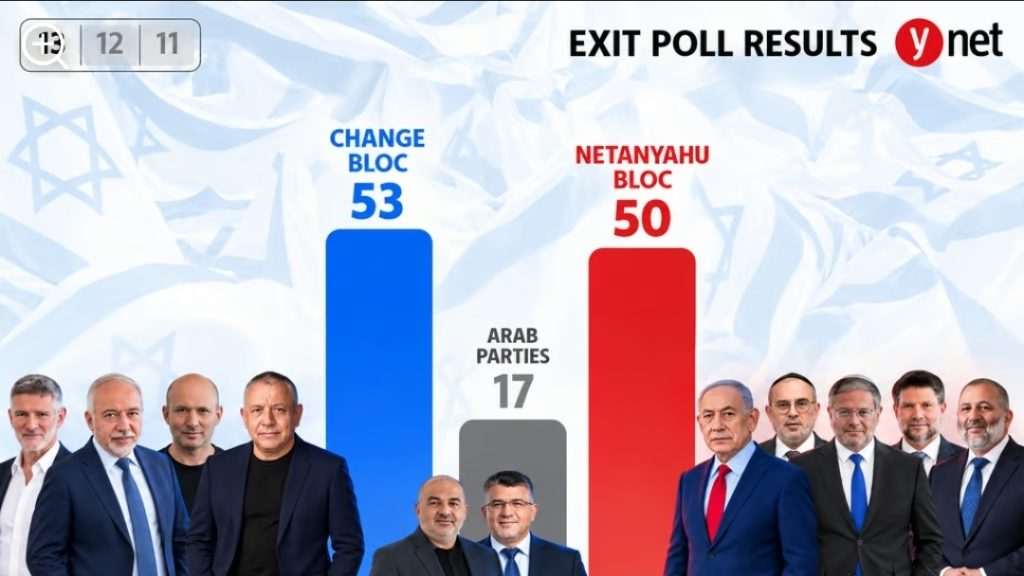
Israeli Prime Minister Benjamin Netanyahu has suffered a major setback in the country’s election, with exit polls projecting significant losses for his right-wing alliance and gains for opposition leader Gadi Eisenkot. However, neither camp appeared likely to secure the 61 seats required for a majority in the 120-member Knesset, leaving the formation of the next government uncertain.
According to the Kan 11 exit poll, Netanyahu’s Likud party was projected to win 25 seats, while his broader right-wing alliance was expected to secure 50. The opposition’s Change bloc was projected to win between 52 and 53 seats. Although Likud remained the largest single party in the projections, the figures suggested a significant decline in support for Netanyahu’s camp.
One of the biggest developments was the projected surge in support for Arab parties, which were expected to win 17 seats, up from the 10 they held previously. Their gains could make them crucial players in government formation, particularly if neither major bloc can assemble a parliamentary majority. Opposition figures reportedly held discussions with Arab leaders about the possibility of forming a coalition.
Eisenkot described the projected outcome as a victory for the opposition, while fellow opposition leader Yair Lapid said Netanyahu’s bloc had suffered a serious defeat. However, the exit polls were not final results, and the eventual distribution of seats could change as votes were counted.
The next steps could take weeks as parties negotiate coalition arrangements. President Isaac Herzog will eventually task a political leader with attempting to form a government capable of commanding majority support in parliament. Until a new prime minister is chosen, Netanyahu will remain in office in a caretaker capacity.
